


FP&A Talent Gap in 2026: Why Technical Skills Matter
Key Points
Introduction
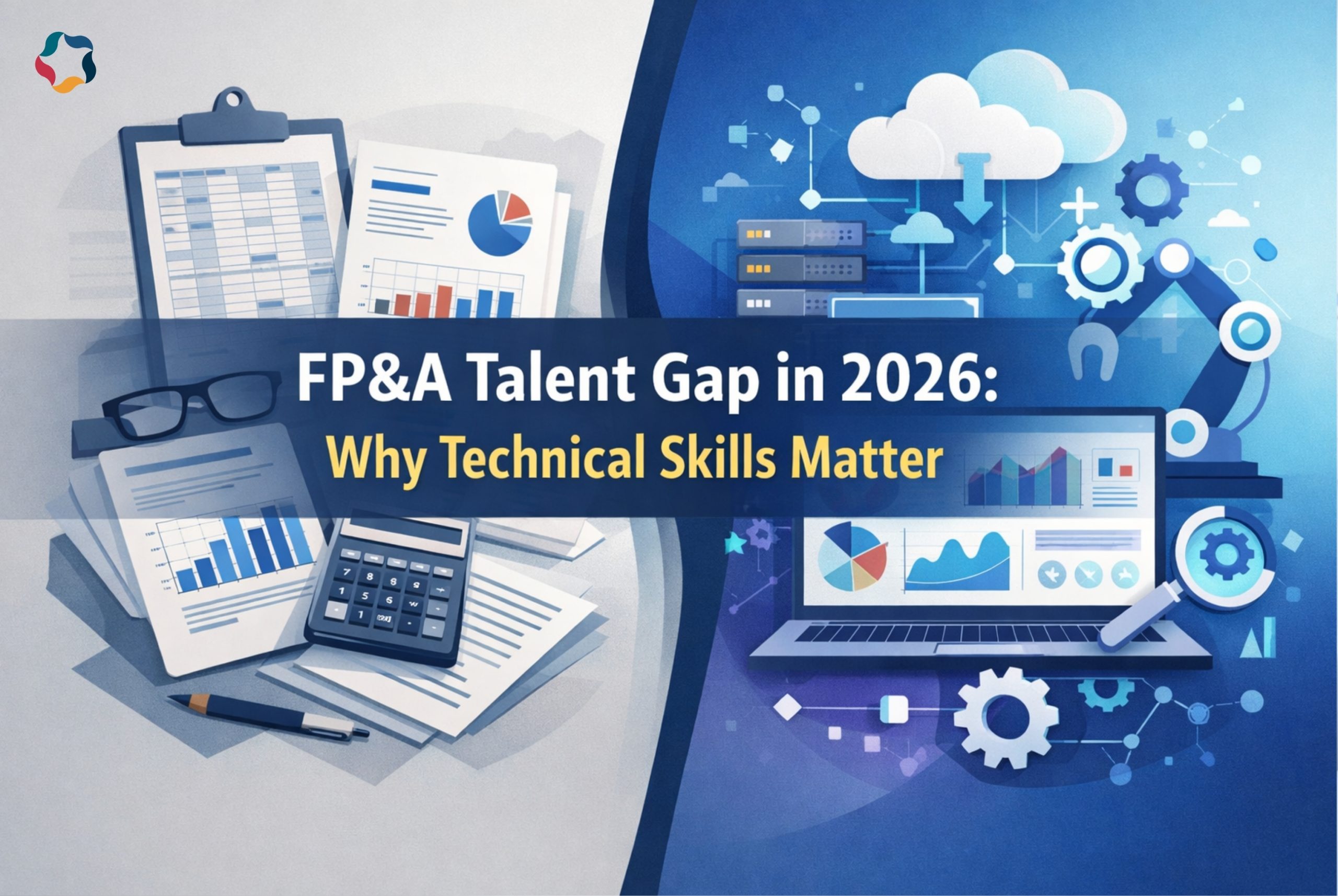
By 2026, I see Financial Planning and Analysis (FP&A) functions facing one of the most significant talent challenges in their history. Across industries, organizations are struggling to find professionals who can combine strong financial acumen with advanced technical capabilities. Traditional FP&A roles that once focused primarily on budgeting, variance analysis, and reporting are rapidly evolving into data-driven, technology-enabled strategic roles.
At the center of this challenge is what I refer to as the finance technology skills gap. I define the finance technology skills gap as the growing mismatch between the technical skills modern finance teams require and the capabilities available in the current talent pool. As finance functions adopt cloud platforms, advanced analytics, automation, and integrated EPM solutions, this gap has become a critical risk to business performance. In this blog, I explain why the FP&A talent gap is widening in 2026, why technical skills matter more than ever, and how organizations can address the finance technology skills gap effectively.
The Evolution of FP&A Roles
Historically, FP&A teams were primarily responsible for backward-looking analysis. In my experience, Excel-based models, static reports, and periodic forecasts were sufficient to support decision-making in earlier operating environments. That reality has changed.
In 2026, I expect FP&A professionals to work with large, complex datasets, use enterprise performance management platforms, interpret real-time financial and operational data, support scenario modeling, and collaborate closely with IT and business teams. This evolution has significantly widened the finance technology skills gap, as many finance professionals still bring strong accounting and business knowledge but limited exposure to modern finance technology.
Defining the Finance Technology Skills Gap
When I talk about the finance technology skills gap, I am not referring only to coding or advanced programming. Instead, I see it as a broad set of competencies required to operate effectively in a modern finance environment.
From my perspective, the finance technology skills gap includes limited understanding of EPM and FP&A platforms, weak data modeling skills, lack of automation experience, insufficient exposure to business intelligence tools, and minimal familiarity with cloud-based finance systems. As organizations modernize their finance architectures, this gap becomes more visible and increasingly costly.
Why the FP&A Talent Gap Is Widening in 2026
I see several converging factors accelerating the FP&A talent gap and intensifying the finance technology skills gap. The pace of technology adoption has clearly outstripped traditional finance training. At the same time, many experienced professionals struggle to adapt to modern platforms that demand a different way of working.
Competition for digitally skilled talent also plays a role. Finance teams are now competing with technology, analytics, and product teams for the same skill sets, which further increases the finance technology skills gap across organizations.
The Impact of the Skills Gap on Business Performance
In my experience, the finance technology skills gap has direct and measurable consequences for business performance. These include longer budgeting and forecasting cycles, limited scenario planning capability, increased dependency on IT teams, higher data quality risks, and reduced credibility of finance insights.
For these reasons, I view closing the finance technology skills gap not as an HR initiative, but as a business imperative.
Technical Skills That Matter Most in FP&A
To address the FP&A talent gap, I believe organizations must be explicit about the technical skills required for modern FP&A roles. These include proficiency in EPM platforms, experience with automation, understanding of data integration concepts, effective dashboarding, and familiarity with cloud fundamentals.
Building these capabilities directly reduces the finance technology skills gap and enables FP&A teams to operate with greater confidence and independence.
The Role of Technology Platforms in the Talent Gap
I have also observed that technology platforms themselves play an important role in either widening or narrowing the finance technology skills gap. Unified and intuitive finance platforms reduce unnecessary complexity and enable faster learning.
Well-designed systems empower finance users, support consistent processes, and create an environment where technical skill development becomes sustainable rather than overwhelming.
Change Management and Learning Culture
From my perspective, closing the FP&A talent gap requires sustained investment in continuous learning, cross-functional collaboration, and hands-on training. It also requires recognizing and rewarding technical skill development within finance teams.
Without this cultural shift, the finance technology skills gap will persist regardless of how much technology an organization deploys.
The Role of Leadership in Closing the Gap
I believe leadership commitment is critical to closing the FP&A talent gap. Finance leaders must redefine FP&A roles, embed technical skills into performance expectations, and support structured upskilling initiatives that directly address the finance technology skills gap.
Without visible leadership ownership, skill development efforts tend to remain fragmented and ineffective.
Looking Ahead: FP&A Careers in 2026 and Beyond
For both finance professionals and organizations, I see addressing the finance technology skills gap as essential to building agile, resilient, and insight-driven finance teams. Those who invest early in technical capability will be better positioned to adapt as finance continues to evolve.
Conclusion
In my view, the FP&A talent gap in 2026 is driven primarily by the growing finance technology skills gap. Organizations that invest deliberately in skills, culture, and modern platforms will position finance as a strategic enabler rather than a transactional reporting function. Those that do not risk limiting the future relevance and impact of their FP&A teams.


Sameer Pota
Project Manager
Sameer Pota is a Project Manager at Solution Analysts, recognized for effectively managing timelines, resources, and stakeholder communication. As a OneStream expert, he oversees client implementations, ensures seamless project delivery, and mentors developers to maintain best practices and deliver high-quality financial solutions.