


Why Your Close Process Is Slow?
Key Points
Why a fast close cycle OneStream Forces You to Rethink Your Operating Model
Your close process is slow because your CPM platform is reinforcing fragmentation, manual judgment calls, and post-fact reconciliation rather than enforcing an end-to-end operating model—and until you change that foundation, no amount of calendar pressure or headcount will deliver a true fast close cycle OneStream is explicitly designed to support.
Your close is slow because your system tolerates ambiguity instead of eliminating it
I have yet to see a genuinely fast close in an environment where the system allows multiple interpretations of “done.” In most legacy CPM platforms, consolidation, journal processing, intercompany elimination, and validation are technically available but operationally disconnected. The system lets teams decide when they are finished rather than forcing the process to converge.
This is precisely where a fast close cycle OneStream changes behavior. The platform does not assume that smart people will coordinate manually. It assumes the opposite: that complexity must be engineered out of the process. When close steps are orchestrated, certified, and dependency-driven, ambiguity disappears. Controllers stop negotiating timelines, and the system becomes the arbiter of readiness.
Spreadsheet dependency is not a people problem; it is an architectural failure
Most finance leaders tell me their close is slow because teams still rely on Excel. That diagnosis is incomplete. Teams rely on Excel because their CPM architecture makes it rational to do so.
What I see with a fast close cycle OneStream is different. Adjustments, annotations, eliminations, and judgmental overlays are modeled natively, governed centrally, and auditable by default. Close speed improves because Excel becomes unnecessary, not because it is banned.
Fragmented close orchestration guarantees late surprises
In slow close environments, consolidation runs, journal approvals, intercompany matching, and validation checks happen in parallel but not in sequence. Everyone is busy, yet no one has a reliable signal that downstream dependencies are safe.
A fast close cycle OneStream treats orchestration as a first-class design concern. Dependencies are explicit, certifications are enforced, and processes do not proceed unless prerequisites are met.
Manual intercompany is the silent killer of close timelines
Intercompany is where close timelines go to die. Matching, reconciliation, and elimination are often treated as post-close cleanup.
A fast close cycle OneStream forces intercompany discipline earlier. Breaks surface when they still matter, changing upstream behavior and tightening booking discipline over time.
Your planning and forecasting design is probably slowing your close
Many organizations slow down their close because planning, forecasting, and actuals live in loosely aligned models.
In a fast close cycle OneStream, planning and close share a common dimensional spine. Forecast adjustments are traceable, reducing reconciliation debates and accelerating sign-off.
Controls and governance accelerate close when designed correctly
Controls are often blamed for slow closes, but weak controls are the real culprit.
A fast close cycle OneStream embeds controls directly into the process. Issues resolve earlier, reviewers focus on exceptions, and sign-off becomes faster because it is credible.
The real speed gain comes from eliminating rework, not compressing calendars
Close acceleration fails when it focuses only on calendar compression.
In a fast close cycle OneStream, reruns disappear, late journals drop, and reconciliation stabilizes naturally shrinking the calendar.
The trade-off: speed requires discipline
A fast close cycle OneStream demands upfront design rigor, clear ownership, and standardization.
Organizations unwilling to commit to governance and process discipline will not realize close acceleration.
Conclusion
A slow close is not an accident, it is a choice. A fast close cycle OneStream reflects a deliberate decision to engineer finance operations rather than rely on heroics.
For CFOs, this means earlier confidence. For FP&A leaders, cleaner alignment between actuals and forecasts. For EPM decision-makers, it means recognizing that close speed is an operating model decision, not a reporting outcome.
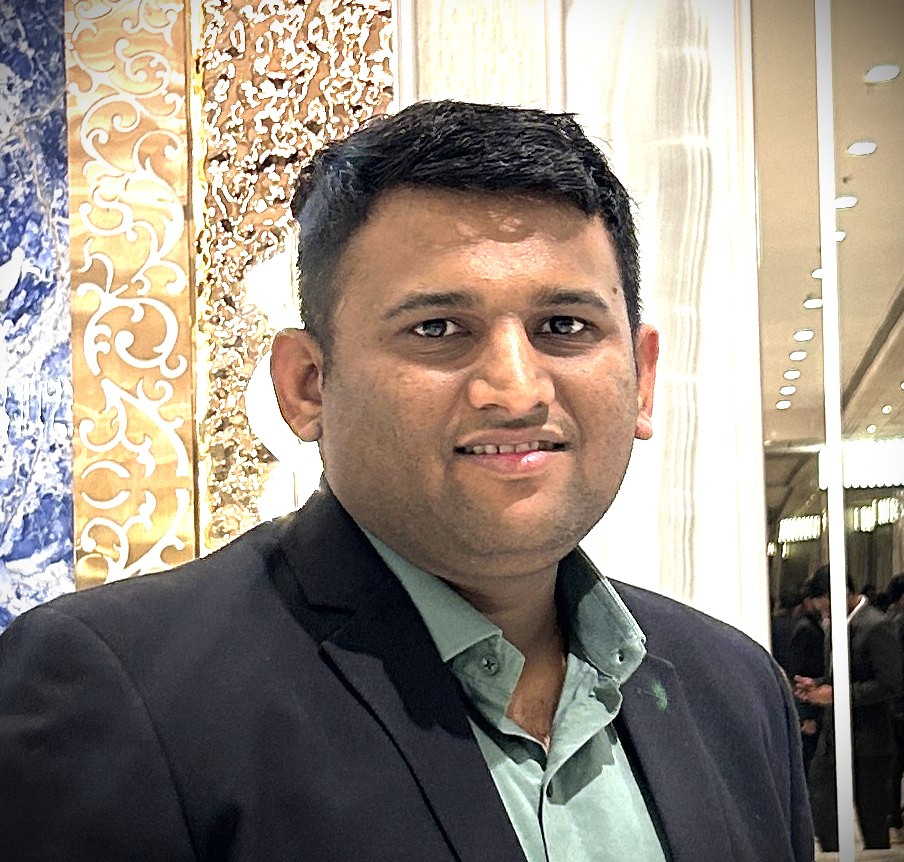
Rajan Shah
Technical Manager
Rajan Shah is a Technical Manager with OneStream Expertise at Solution Analysts. He brings almost a decade of experience and a genuine passion for software development to his role. He’s a skilled problem solver with a keen eye for detail, his expertise spans in a diverse range of technologies including Ionic, Angular, Node.js, Flutter, and React Native, PHP, and iOS.